
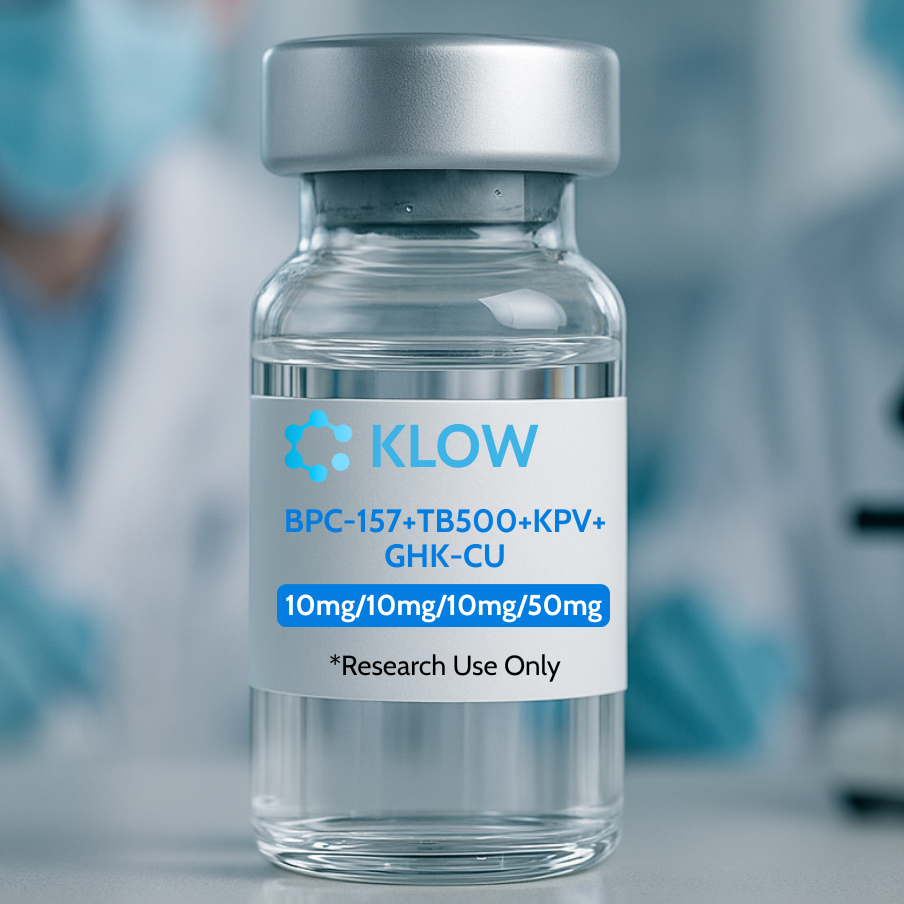
KLOW Peptide Blend: BPC-157 + TB-500 + GHK-CU + KPV
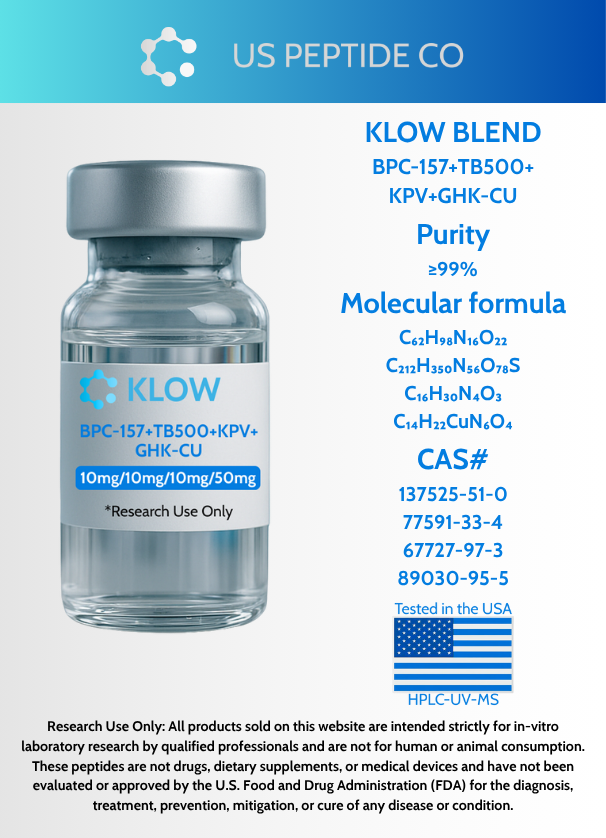
US Peptide Co presents the KLOW peptide blend , this research-grade formulation synergistically combines BPC-157, TB-500, GHK-CU, and KPV peptides, each contributing unique properties for comprehensive scientific investigation.
Physical Form: Lyophilized Powder
This peptide is provided in lyophilized (freeze-dried) form to ensure maximum stability and shelf life. Reconstitution with an appropriate sterile diluent (bacteriostatic water or sterile water for injection) is required before use. The lyophilization process preserves peptide integrity during storage and transport.
- Reconstitution: Bacteriostatic water recommended for research applications
KLOW Blend Composition
This peptide blend features Body Protection Compound-157 (BPC-157), a pentadecapeptide derived from gastric protective proteins. Thymosin Beta-4 fragment TB-500 provides the second component, recognized for its presence in tissue research studies. Copper peptide GHK-CU (Glycyl-L-Histidyl-L-Lysine-Copper) adds trace mineral complexation, while KPV (Lysine-Proline-Valine) is thought to work by downregulating pro-inflammatory cytokines such as TNF-α, IL-1, and NF-κB, which are responsible for chronic inflammation
Research-Grade Quality Standards
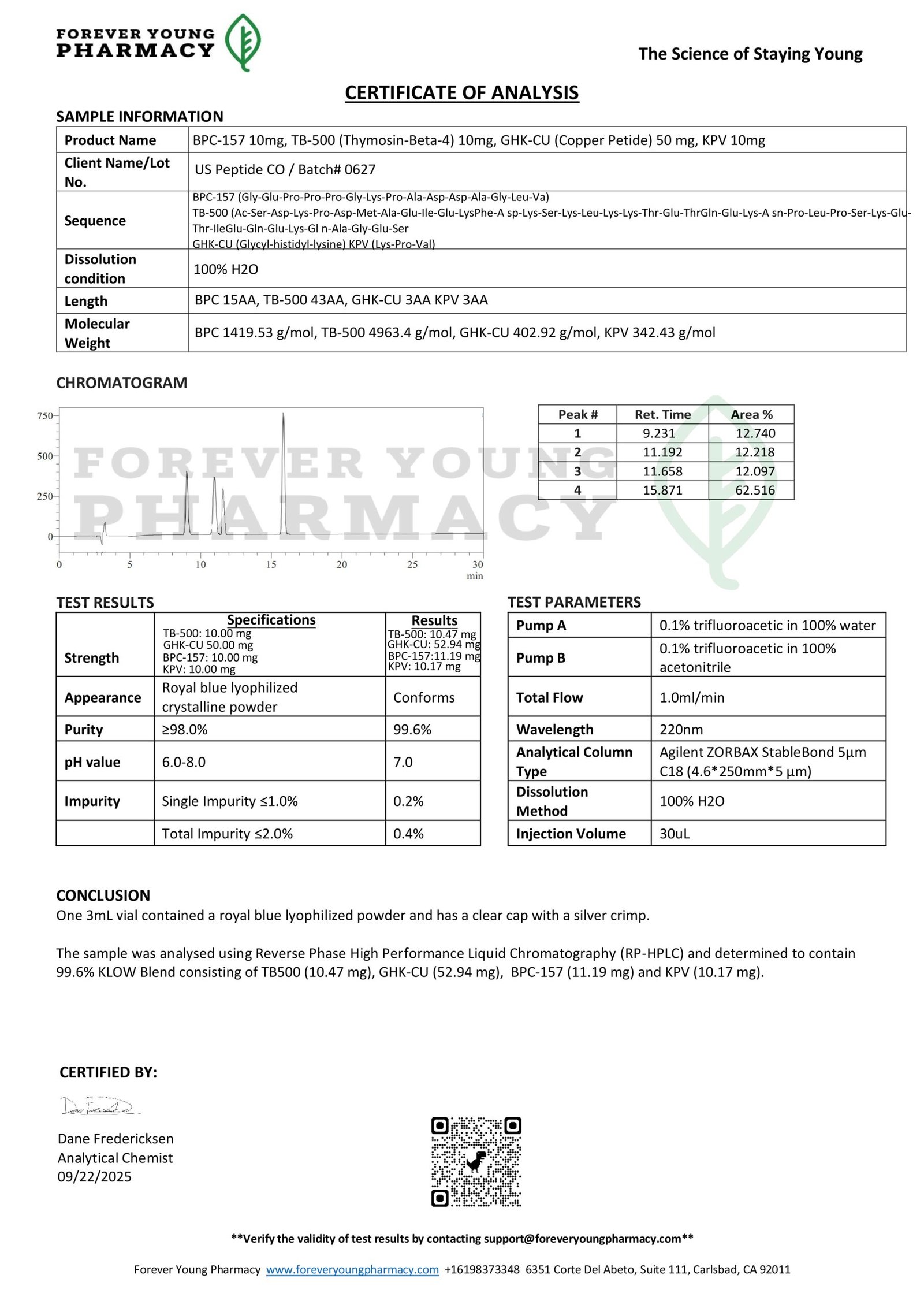
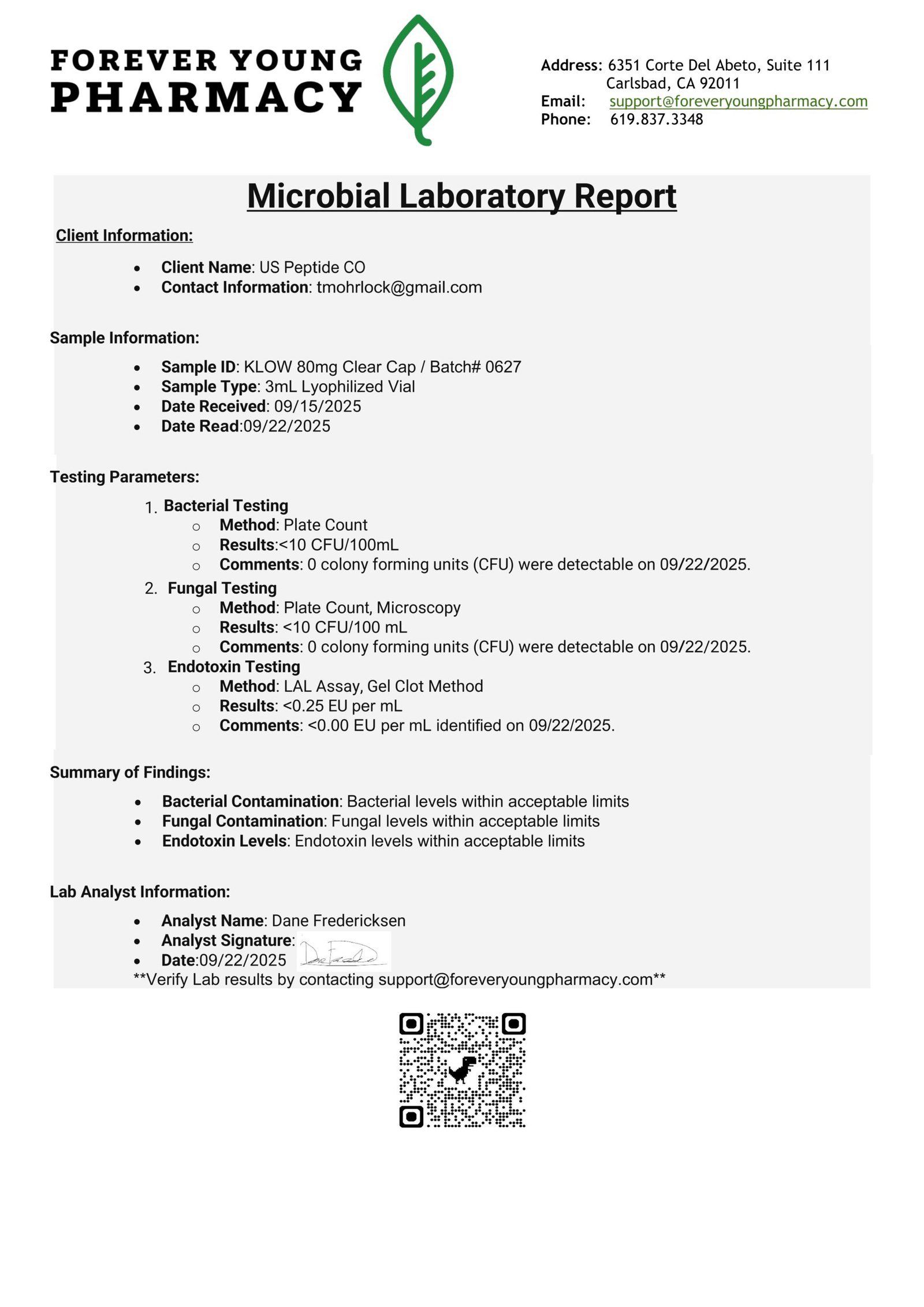
Every KLOW peptide blend batch undergoes rigorous third-party laboratory testing to verify purity, composition, and molecular integrity. US Peptide Co provides complete Certificates of Analysis (COA) with each order, ensuring researchers receive verified, research-grade peptides for their scientific protocols.
Competitive Research Peptide Pricing
We offer the KLOW blend at competitive market pricing with volume discount tiers: 5 items receive 5% off, 10 items earn 10% off, and 15 items qualify for 15% off. This pricing structure supports both individual researchers and institutional laboratories conducting extended peptide research.
Storage and Handling
KLOW peptide blend arrives as lyophilized powder, stable at room temperature during shipping for up to 24 months. For long-term storage, maintain at or below -20°C to preserve peptide stability and research viability.
For research purposes only. Not for human consumption.