
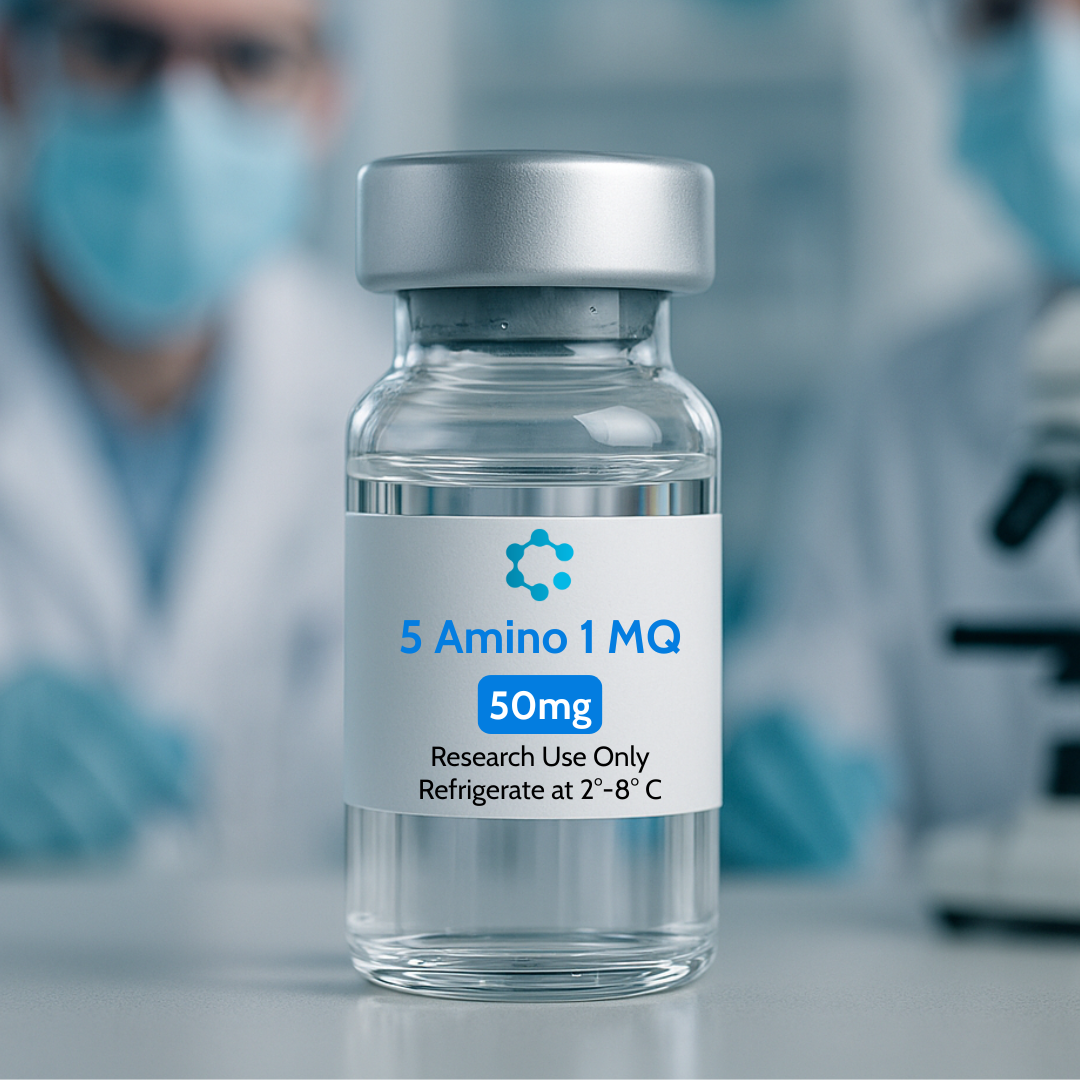
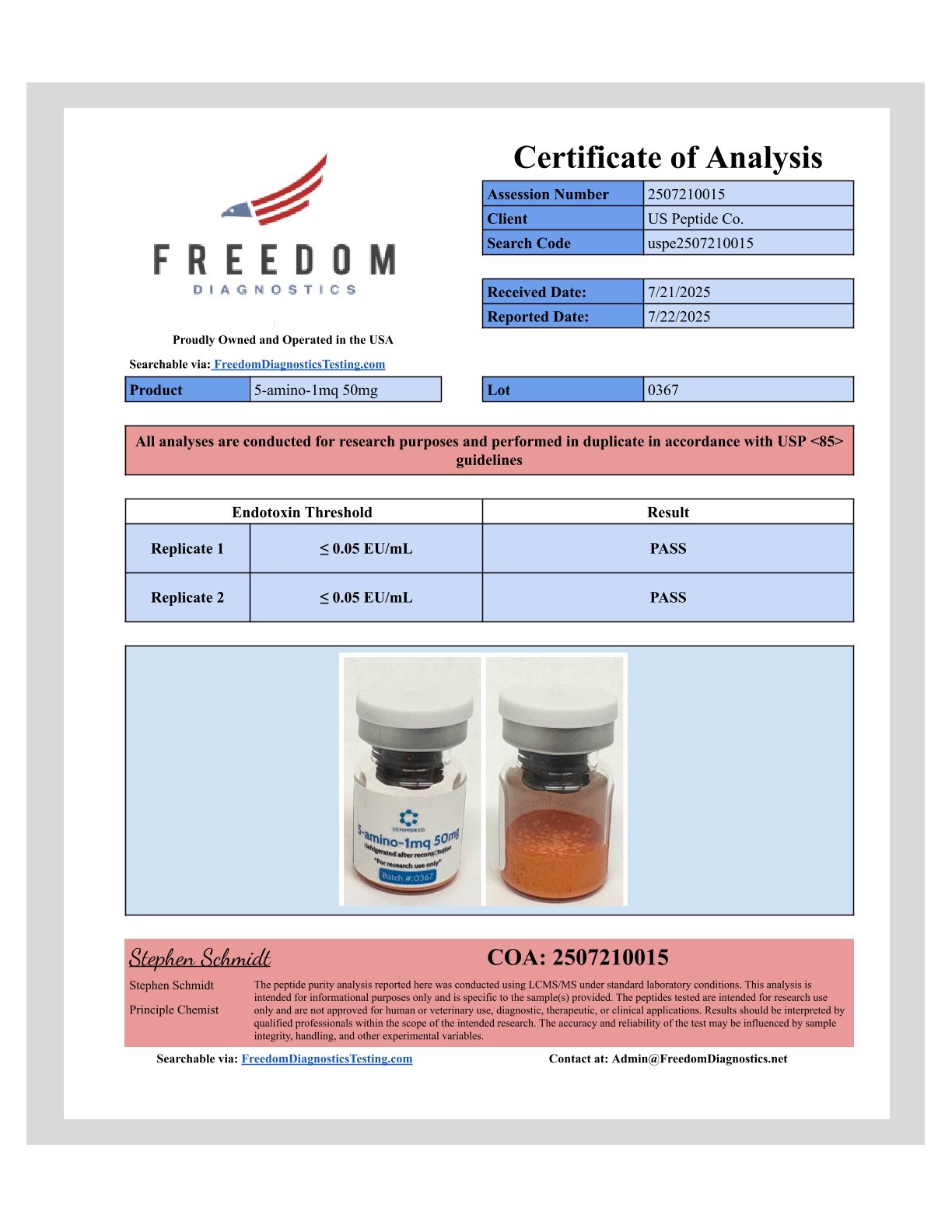
5-Amino-1-methylquinolinium (5-Amino-1MQ) is a small molecule research compound that functions as a selective inhibitor of nicotinamide N-methyltransferase (NNMT). This research-grade peptide is manufactured under strict quality control protocols and verified through comprehensive third-party laboratory testing to ensure maximum purity and consistency for your research applications.
Physical Form: Lyophilized Powder
This peptide is provided in lyophilized (freeze-dried) form to ensure maximum stability and shelf life. Reconstitution with an appropriate sterile diluent (bacteriostatic water or sterile water for injection) is required before use. The lyophilization process preserves peptide integrity during storage and transport.
- Reconstitution: Bacteriostatic water recommended for research applications
Research Applications
5-Amino-1MQ has gained significant attention in metabolic research due to its unique mechanism of action targeting NNMT, an enzyme involved in cellular energy metabolism and NAD+ homeostasis. Research studies have explored its potential applications in:
- Metabolic pathway research
- Cellular energy metabolism studies
- NAD+ biosynthesis investigations
- Mitochondrial function research
Quality Assurance
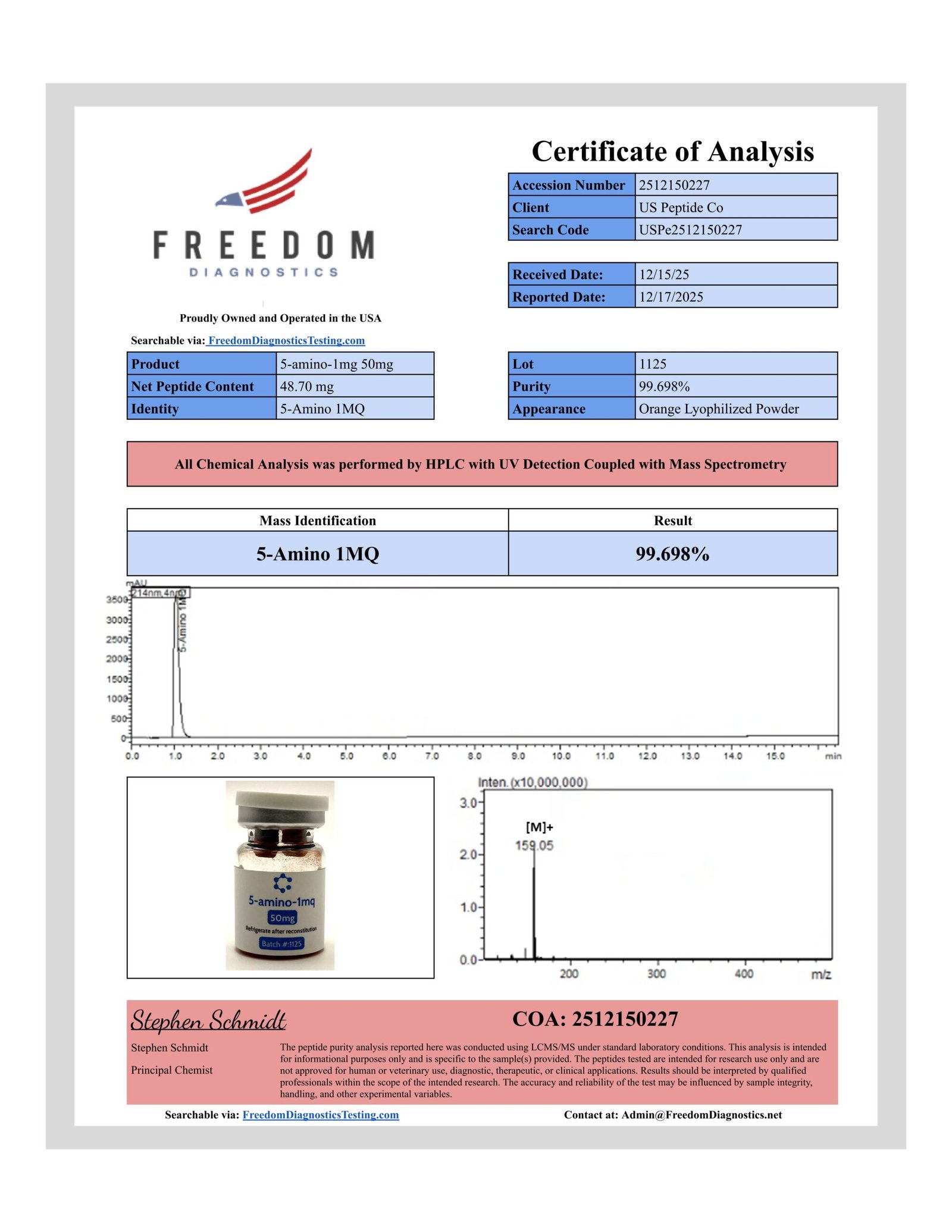
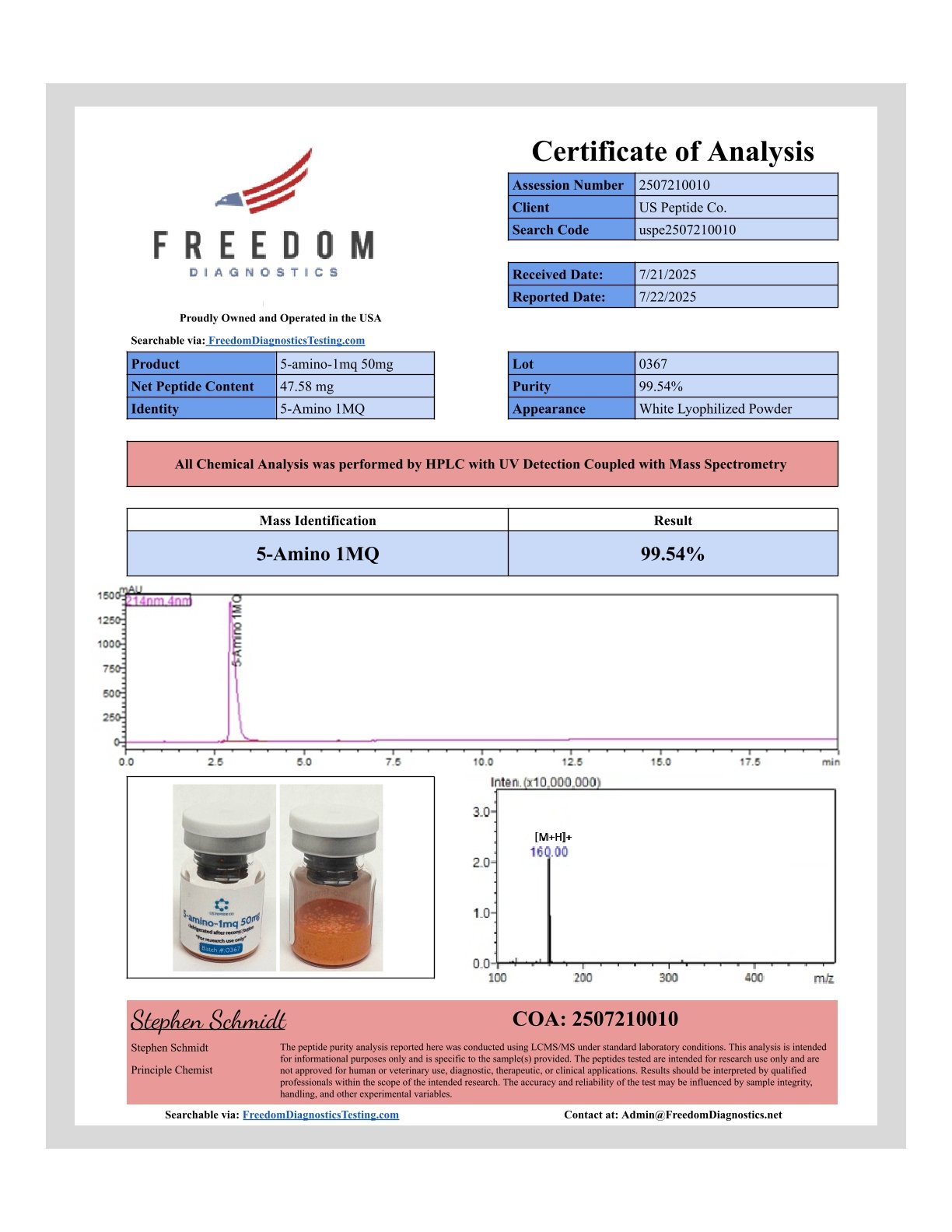
Every batch of 5-Amino-1MQ undergoes rigorous third-party testing. Each order includes a comprehensive Certificate of Analysis (COA) documenting:
- Purity verification (>99%)
- Identity confirmation via HPLC/MS
- Endotoxin levels
Technical Specifications
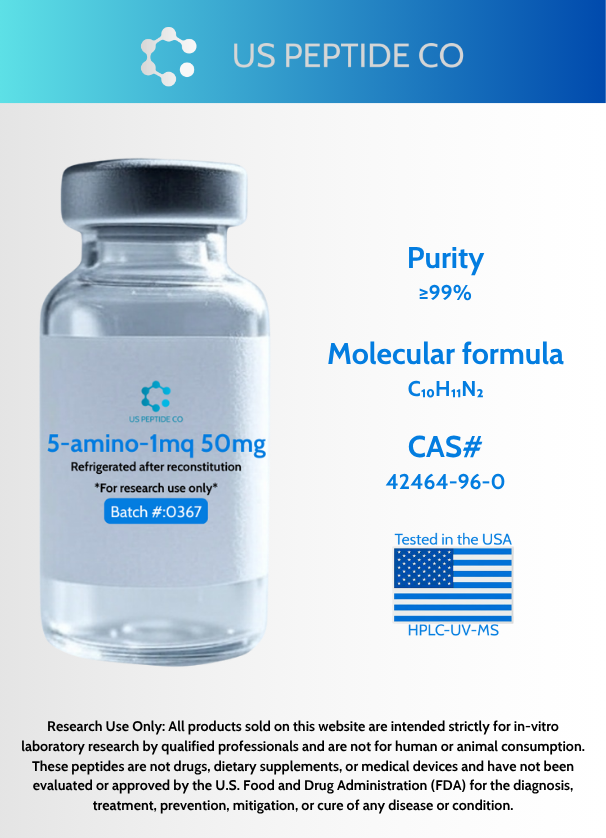
- Chemical Name: 5-Amino-1-methylquinolinium
- CAS Number: 42464-96-0
- Molecular Formula: C₁₀H₁₀N₂
- Appearance: Orange lyophilized powder
- Solubility: Water soluble
- Stability: 24 months at room temperature, extended stability when stored at -20°C
- Reconstitution: Bacteriostatic water recommended for research applications
Recent study published in NIH Library
Research Use Only
This product is intended strictly for laboratory research and analytical purposes only. Not for human consumption, clinical use, or therapeutic applications. All research should be conducted by qualified professionals in appropriate laboratory settings following institutional safety protocols.